

The Mulligan Concept is a manual therapy approach developed by Brian Mulligan, a physiotherapist from New Zealand. It’s widely used by physiotherapists to restore pain-free movement in joints and soft tissues through specific, gentle mobilization techniques combined with active patient movement.
Here’s a breakdown of the key ideas:
🧠 Core Principle
The Mulligan Concept is based on the idea that sometimes a joint may have a “positional fault” — a minor misalignment of the joint surfaces that causes pain or restriction in movement.
By applying a specific mobilization with movement (MWM) technique, the therapist can help the joint glide correctly while the patient moves actively, often immediately reducing pain and restoring motion.
👐 Key Techniques
- Mobilization With Movement (MWM) –
The therapist applies a gentle, sustained accessory glide to a joint (e.g., the knee, shoulder, or spine) while the patient performs a movement that was previously painful or limited.- The glide is pain-free.
- If pain occurs, the therapist adjusts the direction or force.
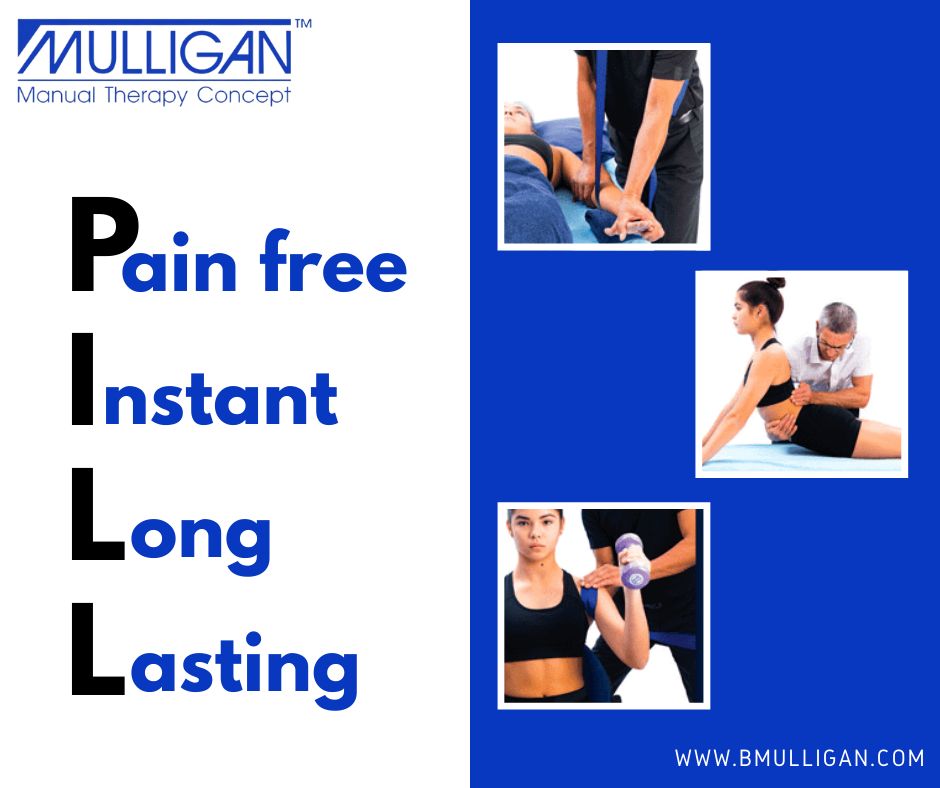
- The goal is to restore normal, pain-free movement instantly.
- Sustained Natural Apophyseal Glide (SNAG) –
A similar concept for the spine, where the therapist applies a sustained glide to a vertebral segment as the patient actively moves.- Commonly used for neck or back movement restrictions.
- Natural Apophyseal Glides (NAGs) –
Passive oscillatory mobilizations applied to spinal segments, often used to improve mobility or relieve stiffness.
💡 Treatment Principles
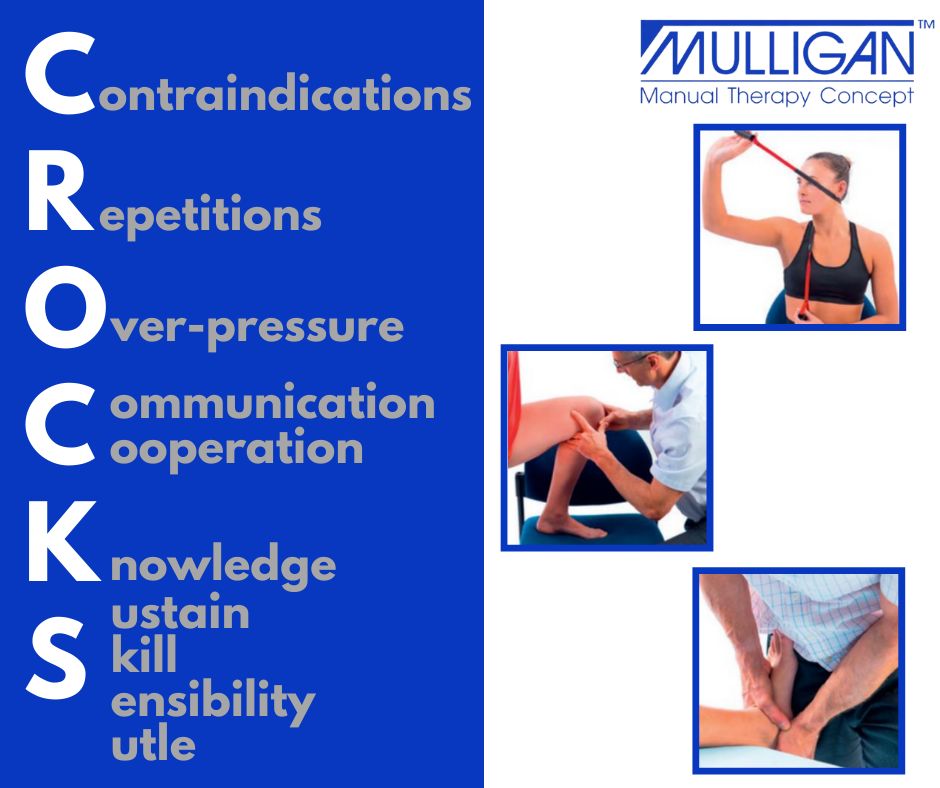
- Always pain-free during the technique.
- The movement should show immediate improvement (e.g., more range, less pain).
- The improvement should carry over after the technique.
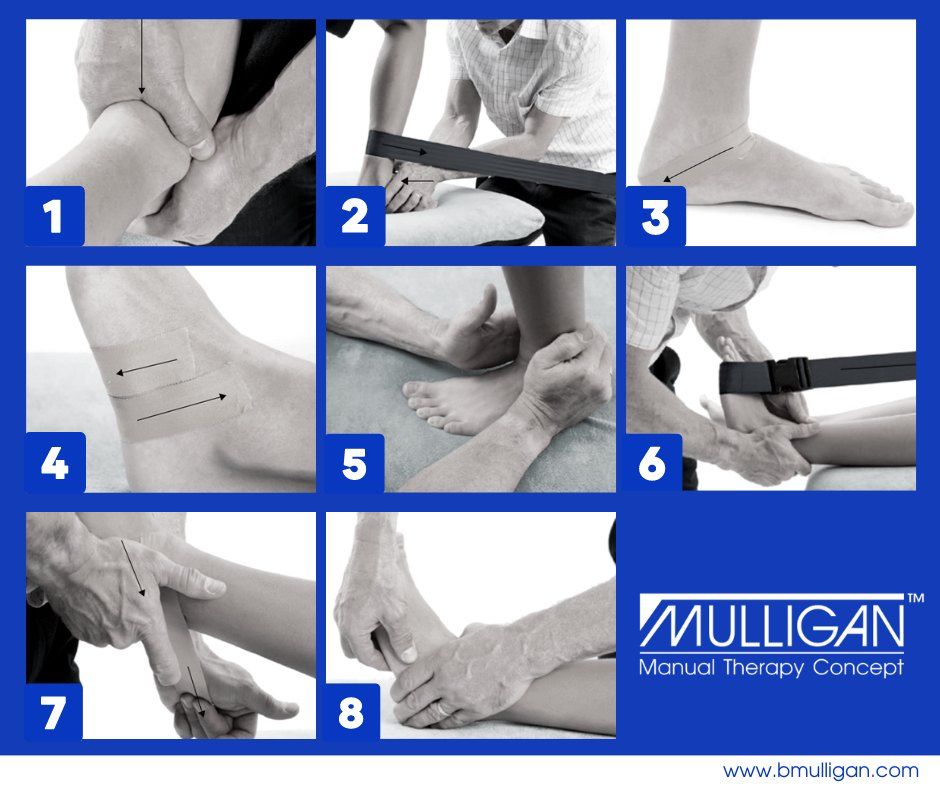
- Simple taping or self-mobilization methods can help maintain gains between sessions.
⚙️ Common Clinical Uses
- Neck pain and stiffness
- Shoulder impingement
- Tennis elbow
- Low back pain
- Ankle sprains
- Knee osteoarthritis
- Hip stiffness